
1801 vs. 1811 vs. 0025: Navigating Federal Land Management Career Ladders
Category: Pipeline Strategy & Agency Insights
Read Time: 6 minutes
When candidates decide to pursue federal law enforcement in public land management—whether with the U.S. Forest Service (USFS), Bureau of Land Management (BLM), or National Park Service (NPS)—they usually start on USAJOBS typing in generic keywords like "Ranger" or "Special Agent."
That approach is a trap.
In federal land management, the job title matters far less than the Job Series Number and the Hiring Authority. A Series 0025 Park Ranger, a Series 1801 Uniformed Law Enforcement Officer, and a Series 1811 Criminal Investigator may all work on the same ranger district, but their daily duties, retirement coverage, equipment, pay ladders, and operational scope are completely different.
If you don't understand these series distinctions before you submit your application, you risk applying for a role that doesn't align with your career goals—or worse, getting screened out entirely.
Here is the definitive breakdown of the three primary series that govern federal land management law enforcement.

Source: youtube.com
1. The 1801 Series: Uniformed Law Enforcement Officers (LEOs)
Primary Agencies: U.S. Forest Service (USFS LE&I), Bureau of Land Management (BLM Law Enforcement).
Primary Focus: Uniformed patrol, high-visibility deterrent, natural resource protection, search and rescue (SAR) support, and initial criminal response on public lands.
The Operational Reality
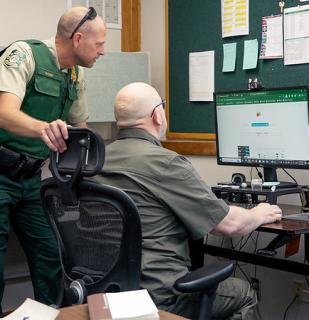
Series 1801 officers are the uniformed patrol backbone of rural public lands. Unlike municipal police officers who operate within dense city blocks with rapid backup, a USFS or BLM 1801 officer often patrols hundreds of thousands of acres alone.
You are handling everything from timber theft, illegal drug cultivation, and mineral degradation to motor vehicle accidents, Search and Rescue (SAR) coordination, and state/federal game enforcement support.
Key Specs & Career Ladder
Target Grades: Typically hired at GS-7/9/11, with non-competitive promotion ladders to GS-11 or GS-12 depending on district and agency structure.
Retirement: Full 6c Enhanced Law Enforcement Retirement (20 years at age 50, or 25 years at any age, mandatory retirement at 57).
Academy Requirement: Land Management Training Program (LMTP) or Uniformed Police Training Program (UPTP) at FLETC Glynco.
Core Competency Needed: High autonomy, rural/remote operational capacity, self-reliance, and strong interpersonal communication skills to de-escalate remote contacts.
Source: www.fs.usda.gov
2. The 1811 Series: Criminal Investigators / Special Agents
Primary Agencies: USFS Law Enforcement & Investigations (LE&I), BLM, NPS Investigative Services Branch (ISB), US Fish & Wildlife (USFWS).
Primary Focus: Complex, long-term felony investigations, environmental crimes, drug trafficking organizations (DTOs), wildland arson, and federal prosecution support.
The Operational Reality
1811 Special Agents rarely wear uniforms or conduct routine traffic stops. Instead, they wear plainclothes and handle complex criminal cases that originate on or affect public lands.
If an 1801 patrol officer uncovers a major illegal timber harvesting operation, a large-scale cannabis grow site, or a historical artifact trafficking ring, the case is typically turned over to an 1811 Special Agent to conduct long-term wiretaps, search warrants, financial tracing, and grand jury indictments alongside the U.S. Attorney’s Office.
Key Specs & Career Ladder
Target Grades: Typically hired at GS-7/9 or GS-11, with career ladders topping out at GS-13 (non-supervisory) or higher.
Pay & Hours: Eligible for Availability Pay (LEAP), which adds an automatic 25% premium on top of base GS pay in exchange for being available for unscheduled long hours.
Retirement: Full 6c Enhanced Law Enforcement Retirement.
Academy Requirement: Criminal Investigator Training Program (CITP) at FLETC Glynco.
Core Competency Needed: Complex case management, meticulous search warrant writing, grand jury testimony, and multi-agency task force coordination.
Source: Boston National Historical Park Facebook Page
3. The 0025 Series: Park Rangers (Protection / Law Enforcement)
Primary Agency: National Park Service (NPS).
Primary Focus: Visitor safety, resource protection, emergency medical services (EMS), technical search and rescue, and law enforcement within National Park boundaries.
The Operational Reality
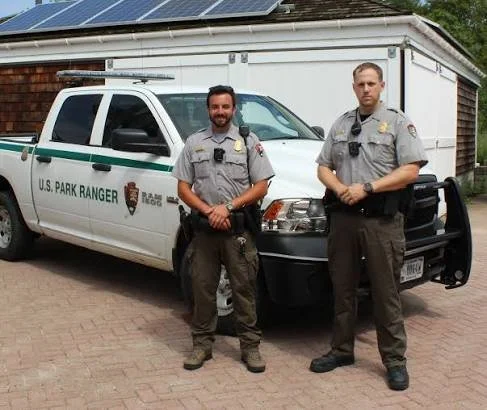
NPS Protection Rangers operate under the GS-0025 Park Ranger series rather than the traditional 1800-series job family, reflecting the agency's dual mission of law enforcement and visitor service.
A Protection Ranger in a major park like Yosemite or Grand Canyon may spend one shift conducting a high-angle technical rope rescue or providing EMT life support, and the next shift serving a federal search warrant or making an OUI arrest on park roadways.
Key Specs & Career Ladder
Target Grades: Commonly structured on GS-5/7/9 ladders, with competitive promotions to GS-11 District Rangers.
Retirement: Full 6c Enhanced Law Enforcement Retirement (for permanent protection commissions).
Academy Requirement: Land Management Training Program (LMTP) at FLETC Glynco (or Seasonal Law Enforcement Training Program for non-permanent roles).
Core Competency Needed: Dual-discipline proficiency—combining tactical law enforcement mindset with EMT/SAR certifications and visitor education.
How to Use This Knowledge to Win on USAJOBS
When building your federal resume, you must tailor your specialized experience language to the specific series you are applying for:
If applying for 1801: Emphasize autonomous decision-making, solo patrol hours, conflict resolution in isolated environments, and familiarity with land management jurisdictions.
If applying for 1811: Emphasize evidence collection, report writing, affidavit preparation, chain of custody, and multi-jurisdictional case management.
If applying for 0025: Highlight emergency medical (EMT) certifications, technical rescue experience, environmental stewardship, and public contacts alongside your law enforcement hours.
Stop treating federal hiring like a shot in the dark. Identify the exact series that fits your operational background, build a targeted USAJOBS resume that matches the specialized experience verbatim, and start making direct connections with regional leadership.
WANT TO DIG DEEPER?
Download the Free FLETC PEB Bench Press Master Guide
Master the proprietary zero-momentum testing machine with our dead-stop simulation blueprint.
Request Private 1-on-1 Advisory
Currently navigating an active USAJOBS announcement or preparing for a panel interview? Apply for private strategy support.
